
The How, Why and When of Asphalt Driveway Care
A professionally installed driveway completely transforms your property, but the key to making it last for decades lies in how it is cared for during its first year.
Because the liquid binder in fresh asphalt takes 6 to 12 months to fully harden and cure, your driveway will remain slightly soft and pliable during its first season. To help you protect your investment, we’ve put together this simple guide on what to expect and how to care for your new surface.
Vehicle and Traffic Guidelines
The 3-Day Rule: You can walk on your new asphalt immediately, but please keep all vehicle traffic off the driveway for at least 3 full days (and slightly longer during spells of extremely hot weather).
Keep Wheels Moving: Avoid turning your steering wheel back and forth while your vehicle is completely stationary. Turning tires in place on fresh asphalt can leave scuff marks and scars.
Drive and Park Gently: Your driveway can be scarred by cars starting out too fast, pulling in too quickly, or making tight turnarounds. During the first year, try to vary your parking spots slightly so you aren't creating permanent depressions in the soft surface.
Handling Heavy Weight
Protect Against Sharp Points: Avoid using jack stands, car ramps, or bicycle kickstands directly on the asphalt. Always place a piece of plywood underneath them to distribute the weight.
Long-Term Storage: When storing campers, boats, or trailers for long periods, place a piece of plywood under the tongue jack and under each tire.
Keep Heavy Trucks Off: Excessive weight from large commercial vehicles can easily depress fresh asphalt. Keep oil delivery trucks, concrete mixers, and heavy utility trucks off your new driveway.
Weather and Temperature Expectations
Summer Softening: Your new driveway will naturally soften on hot days and harden back up when temperatures drop. On particularly scorching summer afternoons, watering down your driveway with a hose will cool and temporarily harden the surface.
The "Soap Suds" Phenomenon: If you hose down your driveway and notice a few soap suds appear, don't be alarmed! This is a completely normal, harmless chemical reaction between the natural compounds in fresh asphalt and the chlorine found in municipal city water.
Minor Puddles: While every effort is made to ensure perfect drainage, a few small puddles can occasionally happen depending on the natural slope and surrounding contours of your yard.
Understanding Texture & Appearance
Varied Texture: Asphalt is a natural mix of various stone sizes, sand, and liquid binder. Because of this, some areas of your driveway may naturally look smoother or rougher than others.
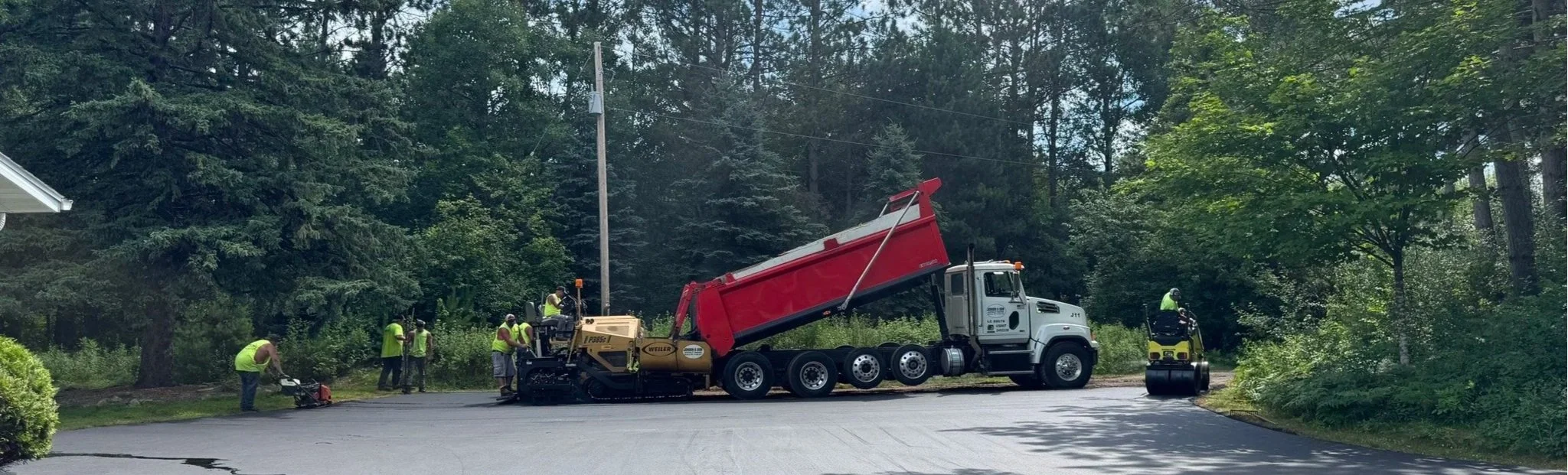
Hand-Raked vs. Machine Laid: Areas around walkways, garage doors, or tight edges that require our crew to rake and spread by hand will naturally have a slightly different surface texture than the wide-open sections laid down by our paving machine. This is a normal sign of hand-crafted quality.
Managing Weeds and Spills
Persistent Weeds: We make every effort to clear and treat the ground before paving. However, some deep-rooted weeds or dandelions are incredibly resilient. If any manage to push through, simply treat them with a spot weed killer or contact us for advice.
Chemical Spills: Avoid gasoline, oil, anti-freeze, and power steering fluid leaks. These chemicals actively dissolve the liquid binder in your asphalt. If a spill occurs and leaves a hole, it should be filled promptly with cold patch.
Looking Ahead: Winter and Sealcoating
Winter Hairline Cracks: Over the winter, the natural contraction and expansion of the freezing ground may cause minor hairline cracks. These can easily be sealed in the spring using crack filler from a local building supply store, or we can handle it for you professionally.
Protect with Sealcoating: Once your driveway is fully cured, applying a professional sealer is the absolute best way to preserve its life. Unprotected asphalt remains porous, dries out, and degrades from winter road salts and sun exposure.
Timing is Everything: Sealing your driveway too soon can actually trap gasses and damage the asphalt. Reach out to us after the curing phase, and we will gladly recommend the perfect window to apply your first protective coat.